Average atomic mass is a crucial concept in chemistry that represents the weighted average of the masses of naturally occurring isotopes of an element. It’s a fundamental idea that helps us understand the properties and behavior of elements, and it’s essential for solving various problems in chemistry. The average atomic mass of an element is typically denoted by the symbol ‘A’ and is expressed in units of atomic mass units (amu).
To work with average atomic mass, you need to have a solid grasp of the concept of isotopes and their relative abundances. Isotopes are atoms of the same element that have the same number of protons but different numbers of neutrons, resulting in different masses. The average atomic mass is calculated by taking into account the masses and relative abundances of these isotopes. This concept is critical in various fields, including chemistry, physics, and materials science.
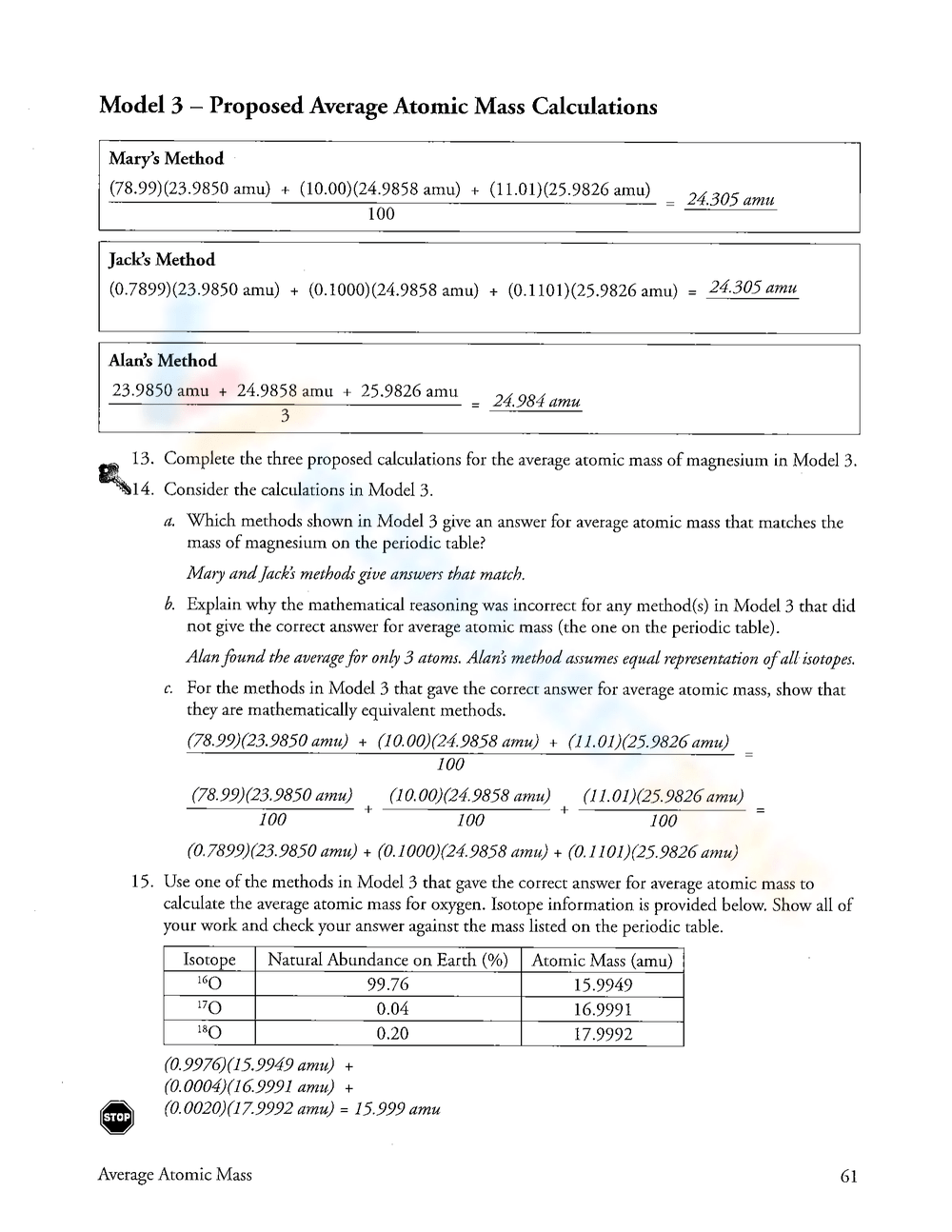
Calculating Average Atomic Mass Worksheets
Understanding Average Atomic Mass
The concept of average atomic mass can be complex, but it’s easier to grasp when broken down into its components. The average atomic mass of an element is calculated by summing the products of the mass of each isotope and its relative abundance. This calculation can be represented by the formula: A = (m1 x %1) + (m2 x %2) + … + (mn x %n), where A is the average atomic mass, m is the mass of each isotope, and % is the relative abundance of each isotope.
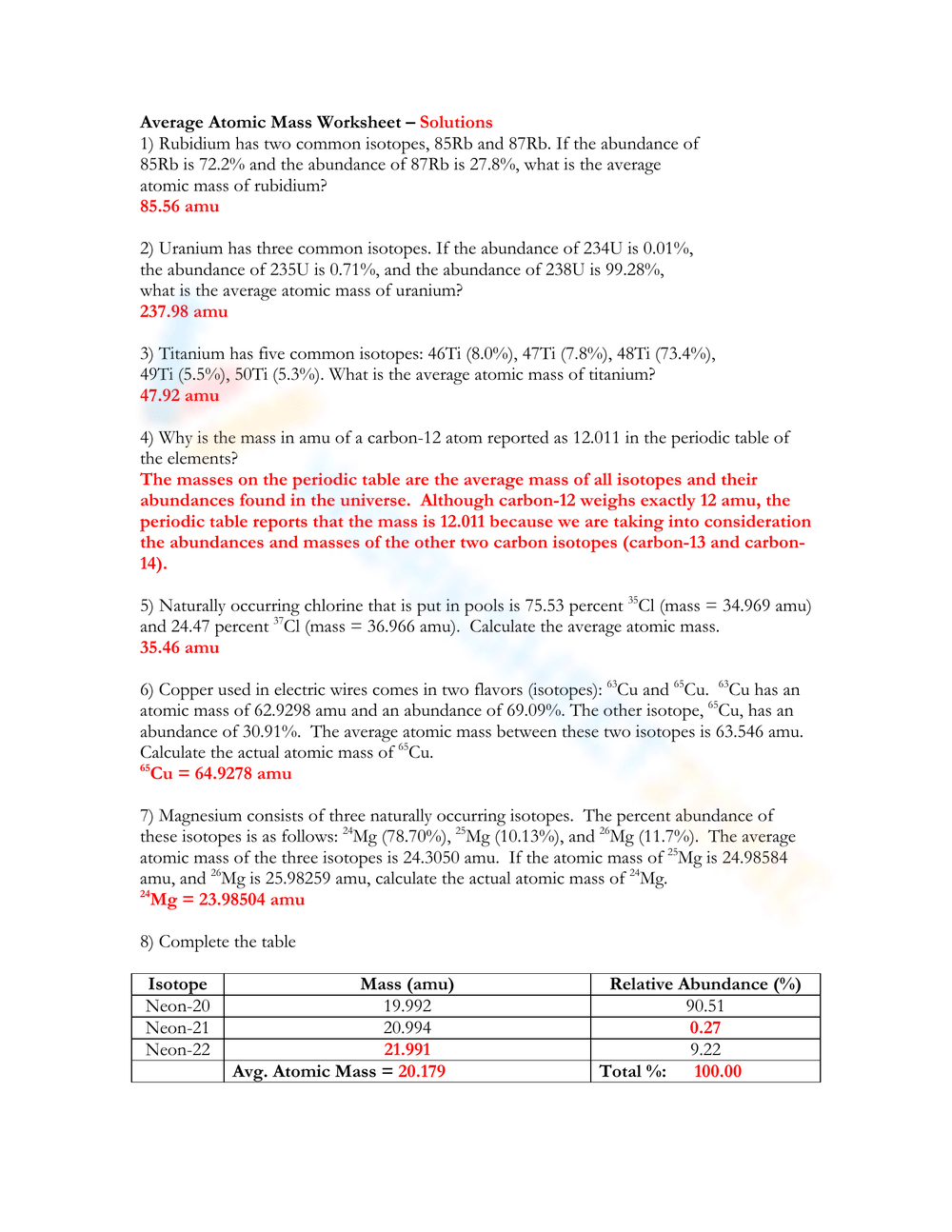
Calculating Average Atomic Mass Worksheets
Calculating Average Atomic Mass
Calculating average atomic mass involves using the masses and relative abundances of isotopes. For example, to calculate the average atomic mass of chlorine, you would need to know the masses of its two naturally occurring isotopes, chlorine-35 and chlorine-37, as well as their relative abundances. Using the formula, you can calculate the average atomic mass by multiplying the mass of each isotope by its relative abundance and summing the results. This calculation yields an average atomic mass of approximately 35.5 amu for chlorine.
Applying Average Atomic Mass to Real-World Problems
Applying average atomic mass to real-world problems is essential in various fields, including chemistry, materials science, and pharmacology. For instance, understanding the average atomic mass of elements is crucial in the development of new materials, such as alloys and composites. It’s also important in the synthesis of pharmaceuticals, where the average atomic mass of elements can affect the properties and efficacy of drugs. By mastering the concept of average atomic mass, you can develop a deeper understanding of the properties and behavior of elements and their compounds.
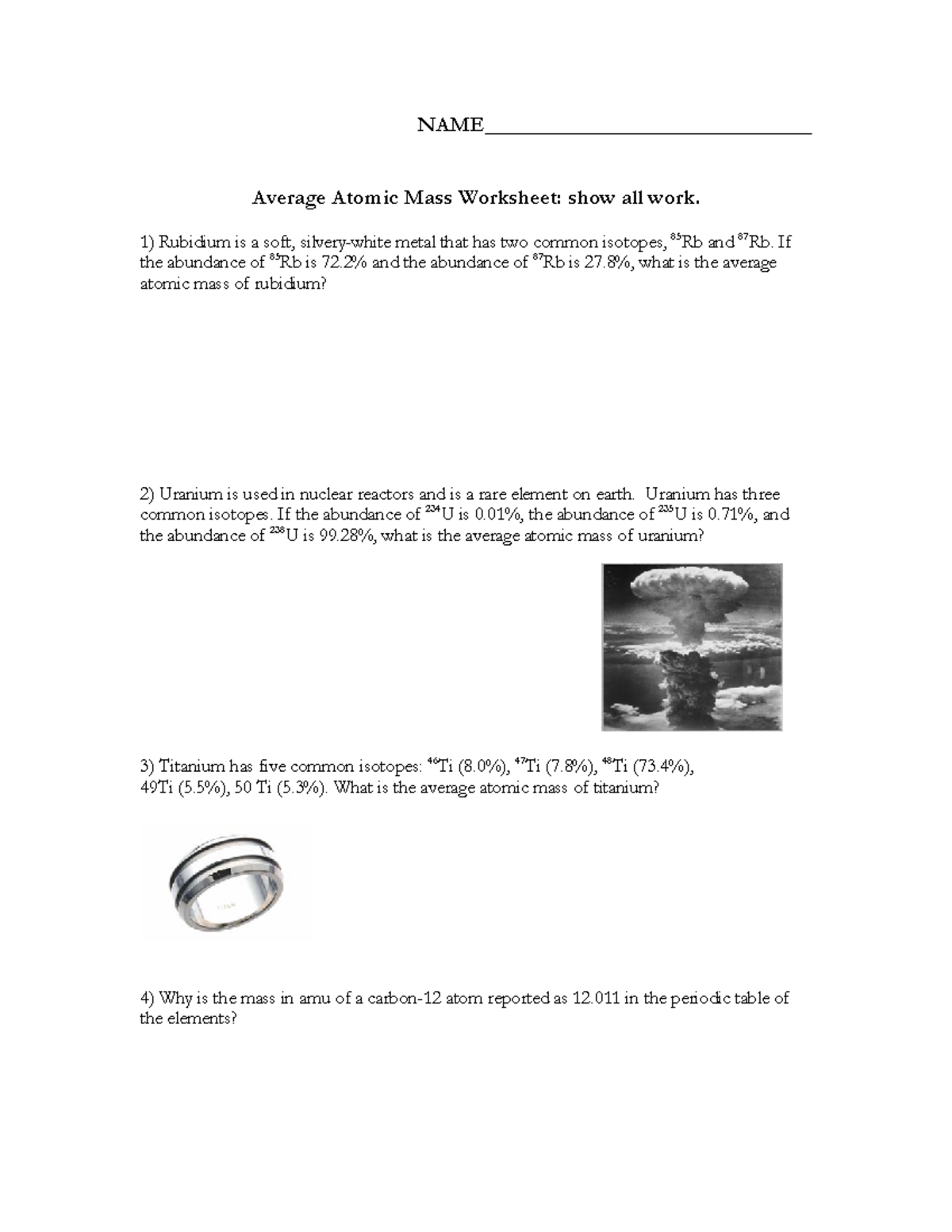
Average Atomic Mass Worksheet Problems Solutions Studocu
Working with average atomic mass worksheets can help you develop a solid understanding of this fundamental concept. These worksheets typically include practice problems that require you to calculate the average atomic mass of elements using their isotopic masses and relative abundances. By working through these problems, you can develop your skills in calculating average atomic mass and applying it to real-world problems. Additionally, these worksheets can help you identify areas where you need more practice or review, allowing you to focus your studies and improve your overall understanding of chemistry.
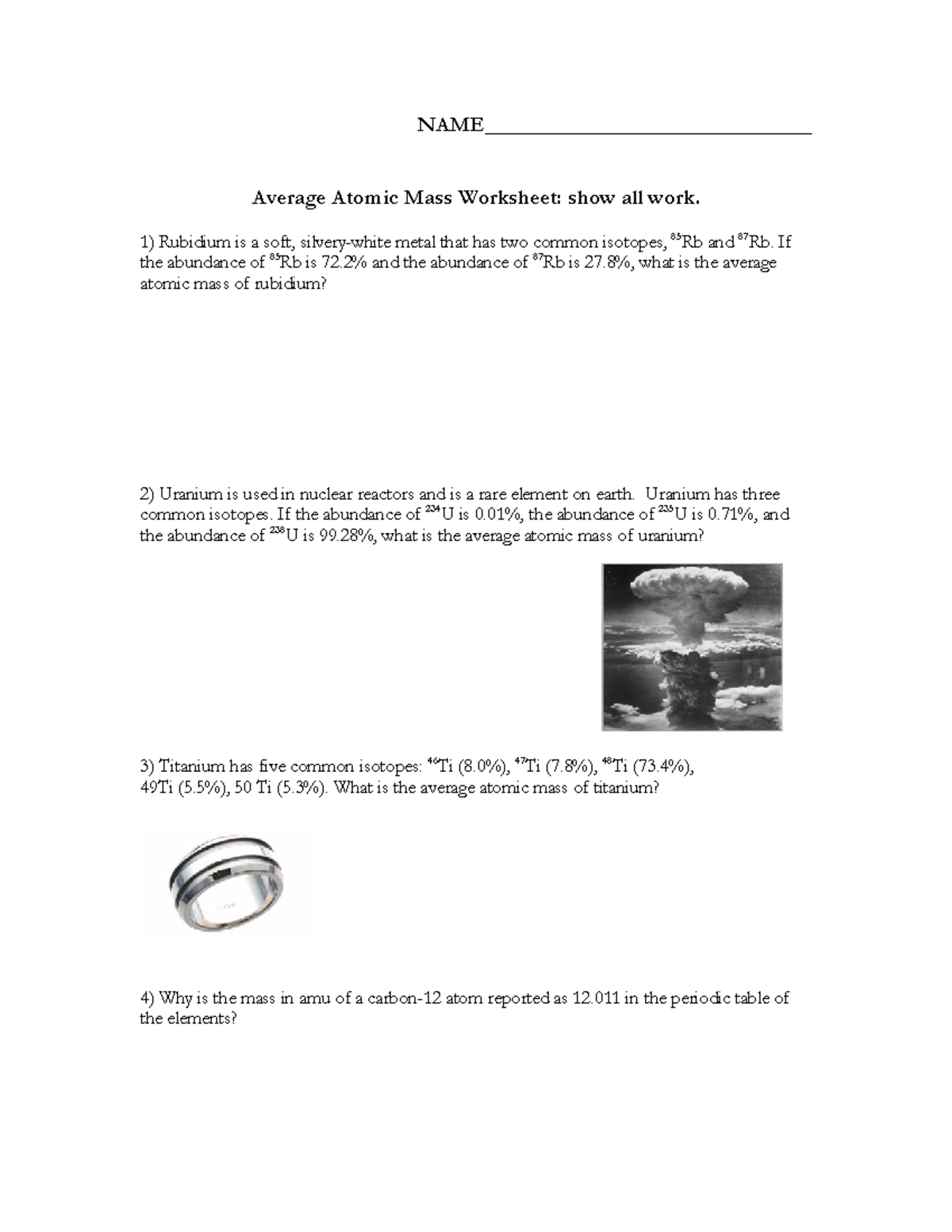
Average Atomic Mass Worksheet Problems Solutions Studocu
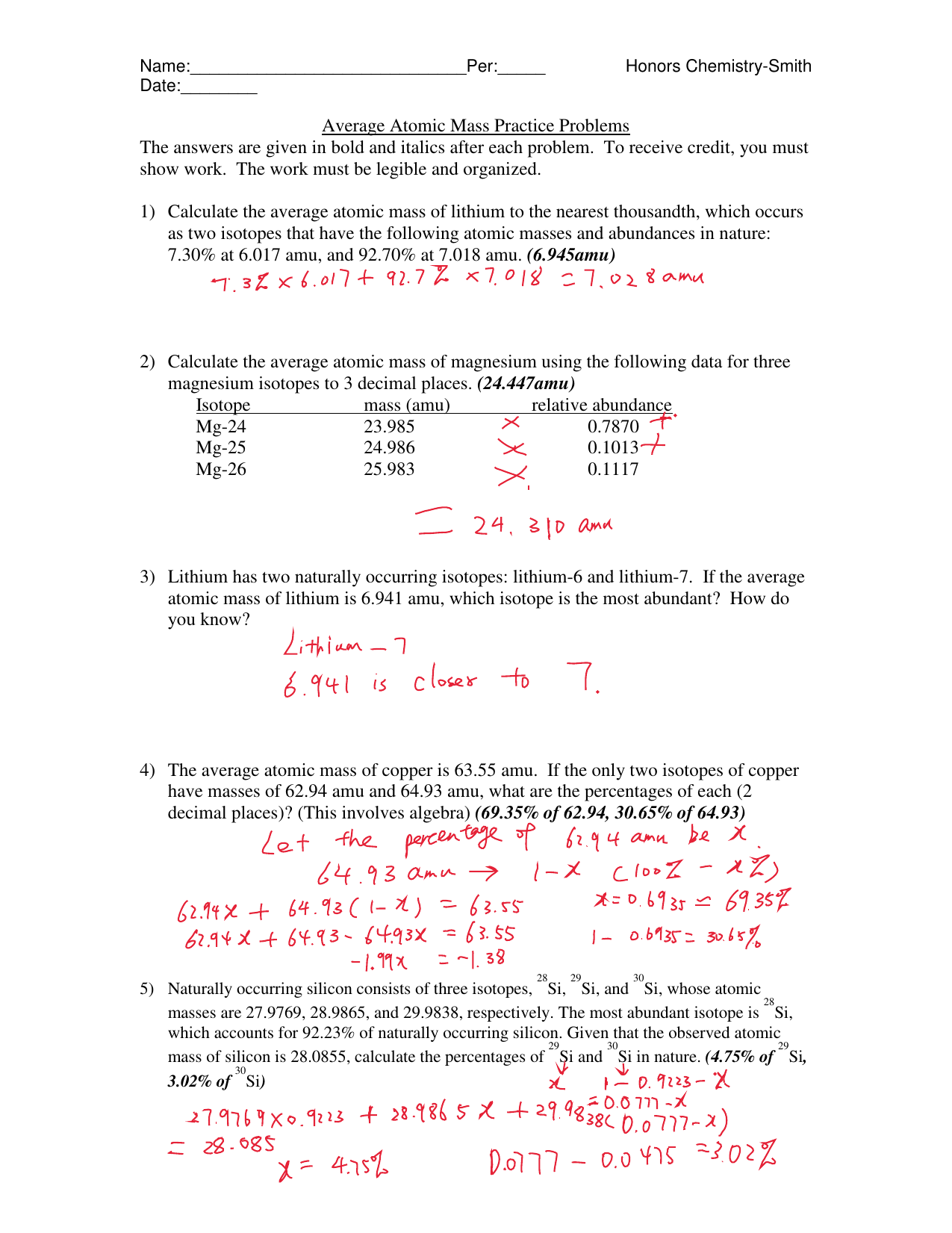
Average Atomic Mass Practice Problems Chemistry